This autumn I’ve returned to academia to pursue professional social work, after spending years of my life doing it unprofessionally, building out programs for community care. Our organization has been in the midst of a move even as I juggle full-time work and full-time academics. And beyond all this, I’ve been planning my own wedding. Autumn has come and the Carolina heat has finally started to pass, carried away in the El Niño wind.
I have difficulty talking about my personal life–I’m a very private person–yet the magical and spiritual work I do is inextricably tied to my personal world. There is no speaking about my magical work without talking about my experiences in community care, and there is no talking about community work without talking about my pursuit of social work. A large component of my work lately is tied into bindings and oaths, and there is no discussion of these oaths without talking about my upcoming marriage. So in the spirit of these intertwined topics, this month’s “field notes” are going to lean into the personal.
The Ancestors of Social Work
We have many ancestors. There are ancestors of our blood, our mothers and fathers and their families, the kin without whose genetic contribution we literally could not be embodied on this earth, and these are the ancestors most people think of first. And there are deep ancestors, those whose names and even species we may not know, kin to the Neanderthals and early mammals, single-celled organisms, the origins of life.
So, too, there are cultural ancestors. Alan Turing always comes to mind as the preeminent queer ancestor: Best known for his work in computing (including but certainly not limited to the famous Turing test), he contributed silently and extensively to the war effort against the Axis powers, only to be chemically castrated for his sexuality and ultimately die of suicide. When I think of queer strength and queer fear in equal measure, I think of him. I also often think of the Haymarket Martyrs, anarchists who bought us our current labor rights with their lives, and whose sacrifice is now glossed over and co-opted in the name of Labor Day parades and presidential union-breaking. I will never forget them and I will always raise their names.
During my social work studies, I have become interested in another ancestor: Jane Addams, one of the founders (if not the founder) of social work. She lived among the people she cared for in settlement houses and contributed to environmental justice, women’s suffrage, children’s rights, early antiracism, and the founding of the field of sociology, among other things. (I see it mentioned much less often that she was queer as well, which seems to have become accepted fact only as recently as 2008.)
I think that it’s easy to get caught up in the excitement of having activist ancestors such that one might forget that they are not gods or mythical heroes, that they are imperfect humans. We should not strive to be our ancestors; often, we should not even strive to emulate them. But we can consider them to be forebears, laying a gravel road. We can walk that road; we can pave it. We can change its course, or extend it into the future. We can see its flaws and reroute it.
This is a viewpoint that I often want to bring into community activist spaces. We do not have to agree with each other on every point. We can be wrong and make mistakes together if we are willing to grow together and with each other’s help. Veneration and respect does not mean deferral to authority. And, indeed, they have yet to invent an authority I will defer to.
Oathtaking
Not recognizing anyone or anything’s authority over my life, I’ve had to take a lot of time to think deeply about what it means to me to take marriage vows.
I attended my cousin’s wedding this month and thought about this quite a lot. In Christian weddings (and even their more secular counterparts), one takes their vows before God, who is equal parts record-keeper and accountability-keeper. One might also say enforcer, though that infringes a bit on the free will aspect of taking vows. This is a reflexive kind of choice, built into the liturgy, that most couples are not consciously making.
What does it mean to make an oath? Who keeps it, and what are the consequences for breaking it? There are a hundred different equally-valid answers to this, but I am inclined toward the social, myself: If a community witnesses you make an oath, then there are natural consequences for breaking it. The community, therefore, must be a community that takes vows seriously. You cannot meaningfully swear wedding vows before a community that does not agree with weddings.
I do, however, bring an animist lens to this. Each action I take in this world is taken before a broader community of spirits, from ancestors to land beings to companion spirits and all those who walk beside us. If I take an oath on a rock, or swear on my mother’s grave, those are meaningful promises even if made with no one else around, because I have sworn before the web of spirits that I walk within, and to them, breaking an oath is a meaningful thing.
Our wedding vows will be made upon similar spirits, and they will also be made before our spiritual community: Our human peers and family, our ancestors, the land around us, our companions and those who we have invited freely to be good witnesses and supporters of our promises. Often, at or near the end of weddings, the officiant will ask if the attendees will support the couple in their new life together, and the attendees are expected to affirm. Even in court weddings, it is expected to bring witnesses.
Manifesting all of this properly in ritual liturgy has been an effort. There is no existing liturgy to fall back on (and oh man, am I opinionated about liturgy). I’ve been delighted to have the support of my equally serious spouse and my lovely friend and officiant to work through all of this, and the guidance of another spirit I won’t here name, for now.
Spirit Work
Something I have been thinking a lot about is the way that spirit work is often treated like a task rather than an exchange. I can be guilty of this, too (just as I am with my friends when I get tunnel vision!). I think of my spiritual tasks as things that I need to tick off of a list (and I asked last year to be trusted with a bigger list, so the list has, indeed, gotten a little big). But, as I’ve said a million times, spirit work is the work of relating. There is no point invoking my companion spirit if I don’t then stop and listen.
This month (amidst my already fraught obligations) my first priority is to do more listening to a specific companion spirit. Rather than speaking, invoking, demanding answers, I would like instead to reverse our roles and provide time for the spirit to speak freely.
I am not a chaos magician or armchair psychologist: Spirits are not psychological aspects of ourselves. They are consciousnesses with agency. We do not keep friends who only ever speak about themselves and never pause to let you say what’s on your mind.
I have expressed before that a large component of the work I do is for the sake of spirits, that is, it does not benefit me in any way (aside from maybe my own growth and experience). I do death work, watershed work, and ancestral healing that does not benefit me, and ask for nothing in exchange. Like community care, this is a form of service that I give to my community. The relationships I have with these spirits are not transactional, and there is no expectation that the work will be returned. Perhaps it will be, and perhaps it will not.
I have had some complicated feelings about sharing my spiritual experiences in a world that is brutally scientist, where even some other witches refuse to believe in magic even as they do it, and where spiritual experiences are commonly pathologized and medicalized. It took many years and a lot of practice to be able to be open to this kind of contact and work. I was not “chosen,” nor did it “come naturally.” I remain a skeptic on many points, but I refuse to be a skeptic publically because the default stance of the contemporary spiritual community in the United States is skepticism and scientism, a total devaluation of experience that cannot be quantified and pieced out in a peer-review study.
My writing on scientism in the spiritual world has been a long time coming, and it’s stayed on deck so long because there’s simply so much meat on that bone. From new witches on Instagram saying “all magic is spicy psychology” to New Agers spreading wild misinformation about quantum physics and the pineal gland, scientism does justice to neither spirituality nor science. There are many beautiful ways that the two can enhance each other; understanding the forces that shape our natural world glorifies spirit in my eyes, rather than competing with it.
#RiteMonthly: Tools
A community is what you make it, and I’ve been dabbling in this again with #RiteMonthly, a monthly magical writing prompt I’ve started to run on Fedi (Mastodon). September’s first experimental prompt was tools:
The prompt for this month is tools! Consider one of these angles, or choose your own:
– What is an unusual, unique, or important tool that you use in your work, and why?
– Are there any tools in your practice that you feel you have an unusual viewpoint or insight on?
– Are there any *figurative* tools that are important in your craft?
The goal of RiteMonthly is to try to recapture some of that (dare I say it) 2004-2014-era magic, when we were having deep conversations about magic and spirituality on LiveJournal, Tumblr, and WordPress, and writing longform essays on our thoughts and research. I’ve felt some despair recently at the advent of the “Witchtok” era of online alternate spirituality, because by its nature it cannot express itself at length and with significant nuance. The medium itself discourages citing sources, existing in dialogue with other writing, and diving deeply into a concept. I don’t think this is a problem that can be solved by any one person, but I can try to build up a tiny community that shares the vision of longform discussion, and so: RiteMonthly.
To address my own prompt, I ended up writing this post exploring some of the historical background of contemporary sigil work. By the time I was done writing on that, it was so dense that I didn’t even get around to my own personal use of sigils, so expect that at some point too.
Catlin LeFey also responded to this prompt this month and wrote a past-and-future reflection on tools in his work. While there’s a lot of ground covered in that post, I was particularly struck by his use of the bell, and it inspired me to determine the note and frequency of my own bell to leverage it in ritual. If this project picks up any momentum, I’d love to highlight others’ entries here in the future and reflect on them.
#RiteMonthly: Death and the Dead
This month’s #RiteMonthly prompt (by vote, since it’s early days and I wanted to see what others would be interested in) is death and the dead, just in time for gloomy, ghostly October.
Participants are welcome to take any approach on this prompt that they like, but if you’d like some possible angles, try using this prompt to…
- honor an ancestor
- talk about your personal desires for death care
- talk about death’s role in your ecosystem
- reflect on your experience with death or graveyard magic
I’ll be writing on this myself this month and look forward to seeing what other people have to say about the topic.
Some Final Notes: Basil
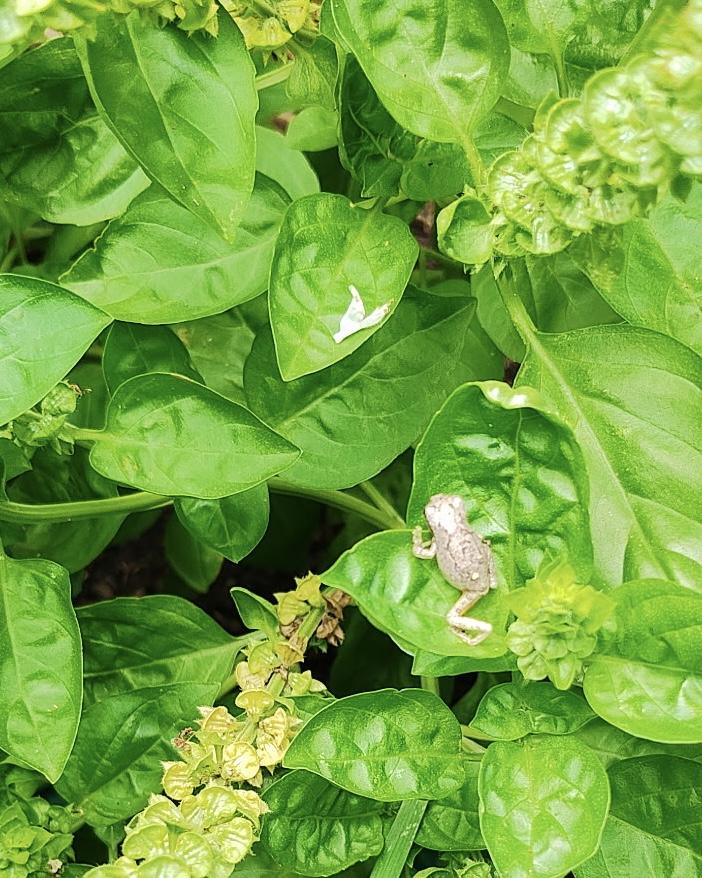
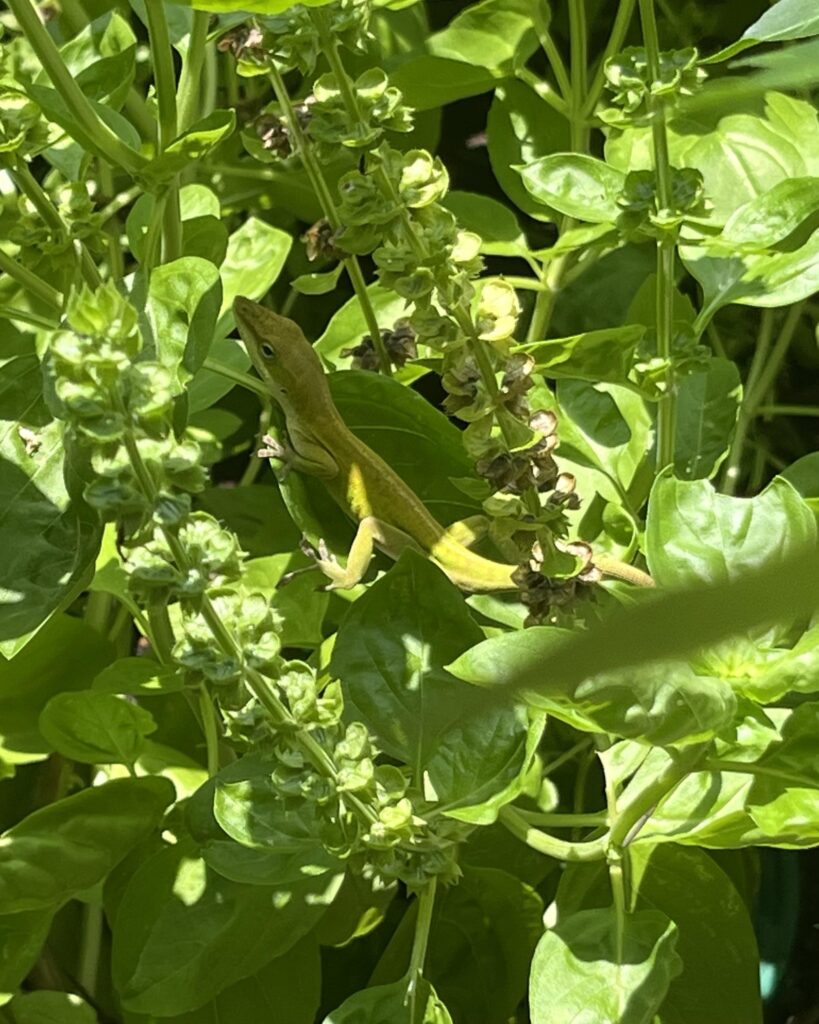
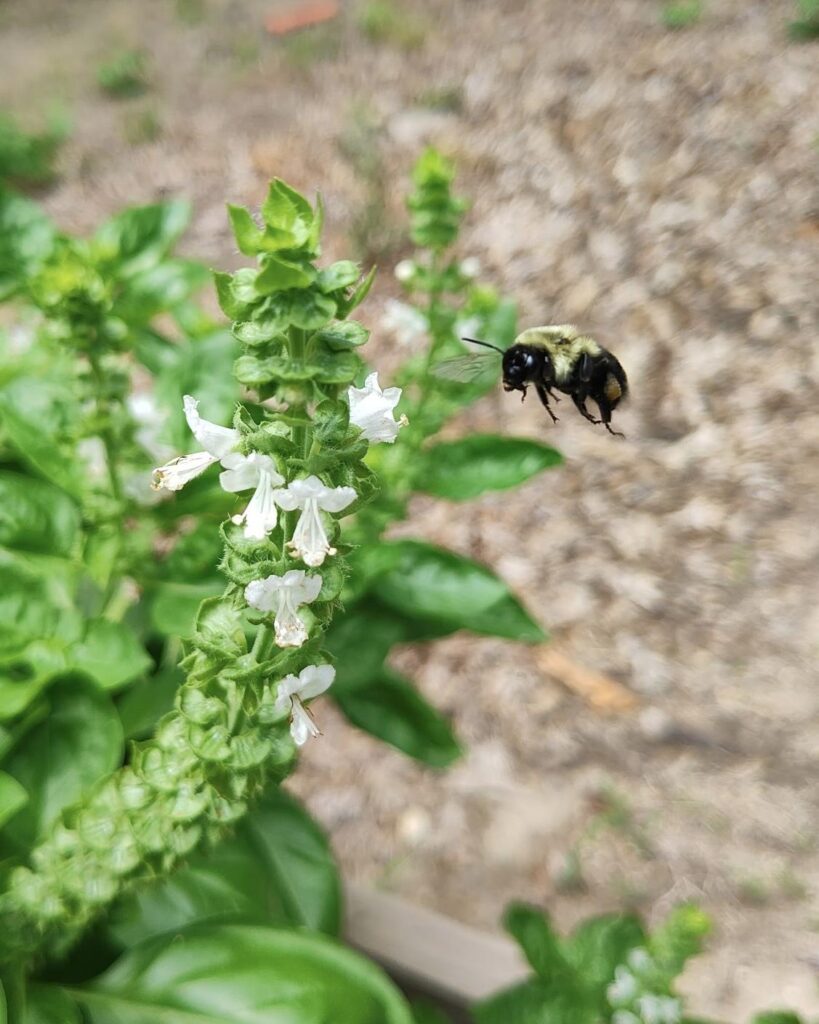
We let the basil go to flower. Part of the reason is that by the time the fall rolls around, it’s simply very difficult to keep up with the maintenance. But I typically let at least one basil plant flower all year long, simply because it does so much for the creatures in the garden. The bees love the basil, and I constantly find creatures using it for shade and shelter.
It is almost time to cut all of the annual herbs back and down for winter, but I will leave the basil until it decides it’s done. The other benefit of keeping it this long is that it is something that can be shared. Beyond simply being an herb I can bag and hand off to friends, my first exposure to keeping basil was accidental: My grandmother cut a few sprigs to send home with me in a plastic bag with a little bit of water to keep them fresh. By the time I had traveled home at the end of the weekend, all of them had put down delicate white roots. Thinking they would die, I potted each tiny sprig into a tiny terracotta pot and set them in the window. Over the months those first sprigs grew so large and strong that I had to transplant them multiple times. I replanted so many cuttings from that one plant that friends still have the descendants of my grandmother’s basil.
As we wrap up the season, I’ve begun keeping cuttings to give as gifts. There is something really interesting and beautiful about everyone I know having a different outgrowth and experience of the same plant, the same spirit.
I’ve shown some of these photographs before, but they’re my favorites:
May there be something in your world that someone keeps to shelter you, too.
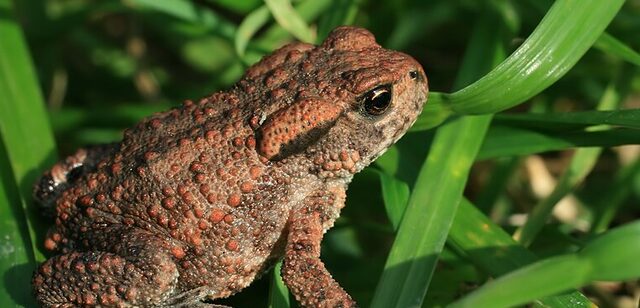
Featured image is of a common toad (Bufo bufo) in grass, Lill-Jansskogen, 2009, Stockholm, Sweden.
