My field notes this year have thus far been focusing on the garden, but this month it finally became almost too hot for me to handle in the scorching North Carolina summer until at last the skies opened and we had thunderstorms for two straight weeks. Instead I’ve spent most of my time indoors.
This is a transitional month for me anyway. After finally receiving my MSc last month, I’ve been preparing now not only to embark on an entirely new Master’s degree this autumn, but to get married–and perhaps for a chaplaincy internship. The community center I’ve operated for several years now is also closing–hopefully temporarily–as our lease runs out and we find a new location, and I’ve been challenging myself to write more often, more freely, and more publicly. Amidst all of this, my relationship with disability has been changing. So where to start?
Firstly, and most pertinently to the blog, I have several folk magic-related projects waiting in the wings. I have a first workshop written at the encouragement of a peer which serves as an effective introduction into spirit-led animist witchcraft and building a locally-embedded body of work. I’ve been collaborating more and more with local anarchosocialist witchcraft collective Sanctum of the Craft, and I may put that workshop on in partnership with them, but as the community center closes the challenge has been to find an adequate venue. I would ideally like a good portion of this workshop to be hands-on, with provided materials, and so a virtual session unfortunately probably won’t work.
There are two other small series that I’ve been chewing on: the witch’s body as ecosystem, and working extensively with the home. The bodily ecosystem series would have some notes not just on ecological theology but also more practical notes on diet and exercise and so forth, from a standpoint of body neutrality. The home work is more of a deep dive. I do not often see a lot of love dedicated to the folk craft of maintaining the home, from the doors and thresholds to the room spirits to the magic of cleaning, and it’s something I feel passionately about.
Beyond the obvious magical work and its associated writing projects, I haven’t spoken extensively here about my dive into martial arts. I was into martial arts when I was younger, and, like so many things, my return was informed simultaneously by the practical and the spiritual. At the same time that I was considering what it meant to maintain my body as my physical limitations change, I started receiving insight on the exact kinds of martial art I should look into. After a few false starts, I began studying modern arnis–centered on stick- and sword-fighting–under a grandmaster, alongside mixed martial techniques for self defense. There is so much to say about the relationship between the body, the spirit, and physical conflict that I can’t possibly delve into it here, but it’s loomed large in my life for the past few months, thinking of the way that actions and training transform us.
My body can be an opponent. It is also my greatest ally. It is how my spirit is embedded and enmeshed in the physical world that we share. It is how I can visit my friends and eat the food they cook for me with love. It is how I can hold hands with my partner and sleep beside them at night. It has brought me pain and hardship and also joy and simple, animal, pleasure. Sometimes we keep each other up at night, and sometimes it carries me into the deep dreamless sleep of the dead. My joints and muscles hurt and tense, but only because they are doing the best they can to carry me. And with my hands I can pet my cat, feel the texture of embroidery, roll dirt into clumps in my fingers; my body wants me to taste the leafy green of tea, smell the linseed oil as I paint, feel the haptic feedback of leaves being crushed underfoot. When I struggle with body neutrality, especially through the lens of disability, I return to the development of skill–with hands, needles, sticks or weapons–and the experience of my senses.
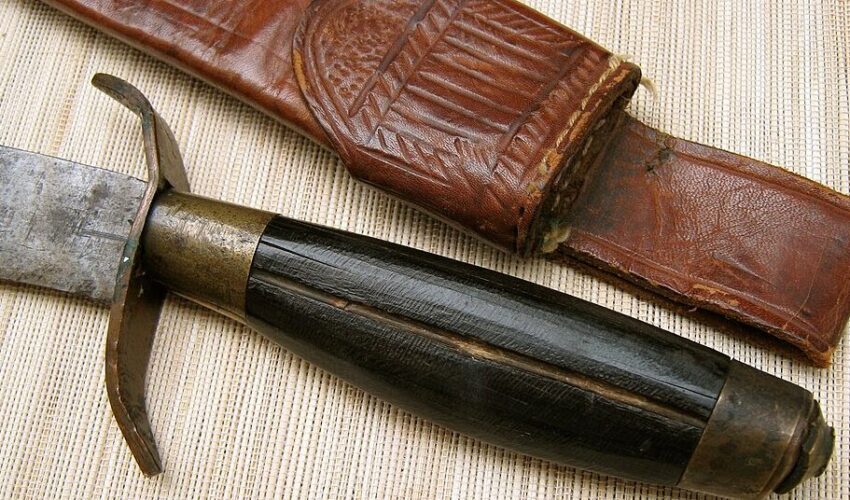
Featured image is a Luzon Matulis bolo, or Filipino shortsword, and sheath, provided by Lorenz Lasco.
