I haven’t always been a “witch’s garden” kind of witch. This is more of a recent development.
I had plenty of exposure to gardens and farms when I was younger. I grew up in the countryside amidst fields of corn, soybeans, and cattle, and my father’s parents were farmers. I was taught gardening young and was spoiled on fresh, homegrown vegetables that nothing from the supermarket could match. But the land that I lived on with my parents was old strip-mined hills, not good for growing much but the most persistent crops. For years I was convinced that I was no good at growing things.
This is only my second year being the almost-sole custodian of a full garden, and the lived wisdom I’ve gained has been eye-opening for me.
Having a relationship with the land around me has always been a large part of my work, but this is a new aspect. Most of my land kinship was developed on the land where I grew up. That place remains deeply meaningful and important to me, but I don’t return there often, and where I live is different. They’re on opposite sides of the Appalachian, which is a natural ecosystemic barrier. I characterize my love for and experience with the Appalachians by my life lived on either side of them. The soil, the trees and forests, the crops, the plants and animals, the insects are often different–not so much that you’d notice on a glance, but materially.
These days I live in the Piedmont. I started my deepest animist work as a dirt witch, and the difference in soil is the most dramatic to me. I grew up in coal country. The soil is what I know now is alfisol, a term I only learned in adulthood. I knew it then by its thickness, its dryness, its rich darkness, and the tight way roots would pack it. The soil where I learned to look at soil is rocky, so rocky it’s hard to grow any real crops on it without a lot of effort, and often coal dust-laden; I remember walking through the mud barefoot and coming back with the soles of my feet completely black.
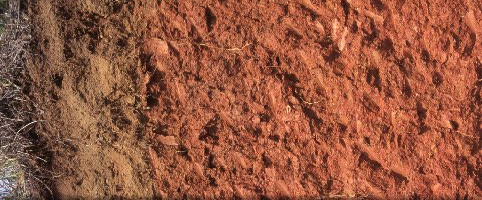
Here, where I live now, the soil is mostly ultisol, a bright red clay soil. Where it isn’t clay, it’s sandy. Many of the forests I’ve been through have a clear divide between the canopy of deep-rooting trees and the underbrush of shallow-rooted ferns and grasses, plants that thrive on this kind of dirt. The two soils have a very different character: to support the ecosystem, yes, but also to look at, to hold, to smell, to walk on. They have their own unique histories.
This is something I think about a lot. Soil is the fulcrum point between rot and new growth, and it carries the histories of the living and dead within it. When I think of developing a relationship with the land, I don’t think of plants or animals first but the soil itself.
Working the garden is first working with the soil. Testing it, yes, amending it, aerating it, supplementing it, but also working it with your hands, working it with tools, smearing it on your skin and getting it packed under your nails. Entrusting seeds and seedlings to it and waiting to see how the soil will tend them. The soil is the first and most sacred bed of the garden.
The featured photograph is a sample of ultisol soil provided by the US Department of Agriculture.